
Why the need for this initiative?
At the turn of the millennium, advancements in technologies jigsawed daily life with digital communication. Rapid changes challenged society’s ability to adapt, and with old problems solved, new business, social, ethical and security issues arose. Flushing 2025 was established specifically to address these issues through smarter infrastructure, technological growth through inclusive development, greater privacy, security, and personal freedoms.
Prior to the twentieth century, New York City was crisscrossed with horse-based transportation which led to a dilemma. Large urban centers were plagued with vast amounts of horse manure that could not be disposed of and it was estimated that horse droppings would rise to Manhattan’s third-story windows. It was an urban planning nightmare that only the invention of automotive technology could cure. But the automobile led to new social, environmental and health problems that quickly impacted cities. Urban centers, with legacy infrastructure designed for simpler times, would not accommodate the rapid growth of transportation and the advancement of the Industrial Age.
In 1893, new visions of future urban centers were birthed in Chicago’s Columbian Exposition. Later, the Megalopolis of Geddes’ Cities in Evolution spurred many an imagination, along with the fascinating yet foreboding world of Lang’s Metropolis. Urbanists and developers were summoned to devise bold new initiatives in order to change infrastructure and invent new communities. Vast highways, communications, and transportation facilities were installed so that the future urban sprawl could be realized.
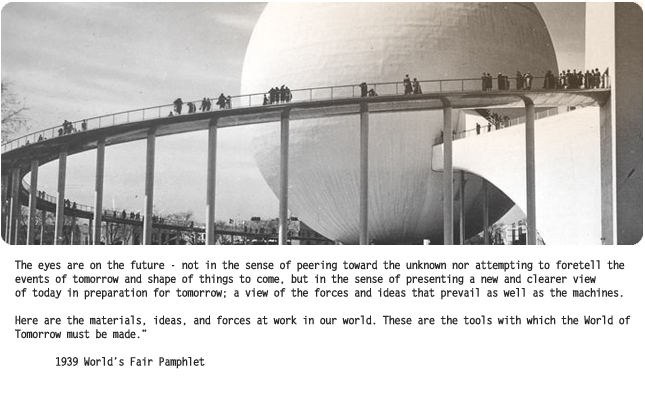
Much like the message of the 1939 World Fair, today’s culture is again challenged with a new kind of future that deserves bolder endeavors.
We expect technology can solve our biggest challenges.
Unfortunately today’s obstacles will never be overcome without the development of necessary intelligent infrastructure and smarter communities. We are well into the twenty-first century and our current infrastructure is still dependent on legacy architecture and frameworks built one hundred years ago.
Digital divides are pervasive in America’s wealthiest cities. Internet freedoms are under siege. Consumers and businesses do not have adequate public wireless utilities, and decaying underground infrastructure cannot support the dynamic nature of today’s culture. Flushing 2025 introduces a new framework a modern cyber society needs.